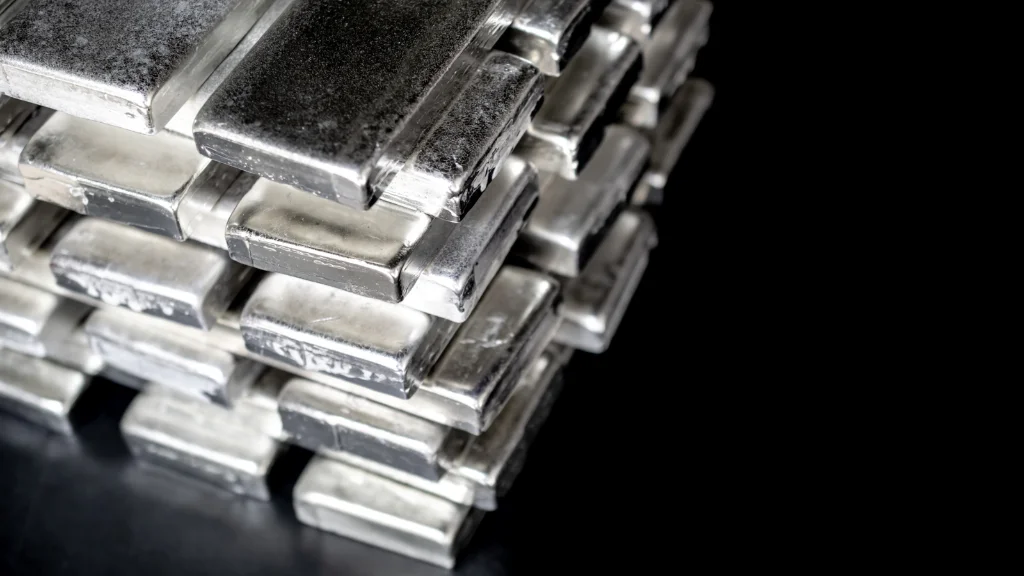
When you look at the global commodities market in 2026, silver is no longer just the "quiet cousin" of gold. It has transformed into a high-performance industrial powerhouse that is central to the global energy transition.
For anyone tracking silver demand trends, the current landscape is one of the most dynamic in decades, defined by a massive gap between what the world needs and what the earth can provide. This structural shift is fundamentally altering how both institutional and retail players choose to invest in silver.
The silver market is currently navigating a "perfect storm" of scarcity and high-tech necessity. While traditional drivers like interest rates and inflation still play a role, they are being increasingly overshadowed by the metal's indispensable nature in the green economy.
This guide breaks down the critical forces shaping the market and why silver’s dual identity as a financial hedge and an industrial workhorse is creating unprecedented price discovery.
The Evolution of Global Silver Demand Trends
The primary engine behind the recent surge in silver prices is a fundamental shift in how the metal is consumed. In the past, silver demand was split somewhat evenly between jewelry, silverware, and industry.
Today, industrial applications account for over 60% of total consumption, a figure that continues to climb as electrification becomes the global standard.
This "industrialization" of silver means that its price is increasingly tied to manufacturing output and technological innovation rather than just monetary sentiment.
For businesses and investors, these silver demand trends represent a structural change rather than a temporary spike. As of 2026, the market is entering its fifth consecutive year of a supply deficit.
This imbalance is not just a footnote; it is the core reason why silver has recently outperformed many other assets in the commodity complex. When industrial users are competing with investors for a dwindling pool of physical metal, the upward pressure on prices becomes significant.
Higher US CPI signals tighter Fed policy, raising global borrowing costs and triggering a risk-off shift where emerging markets like India face immediate selling pressure.
Strong US inflation boosts the dollar, hurts dollar returns for FIIs, weakens the rupee, and causes sharp, liquidity-driven exits from Indian equities.
High-FII-ownership sectors like BFSI and IT sell off first, while US tech weakness spills into Indian IT stocks, dragging Nifty and Sensex lower despite stable domestic fundamentals.
Why Investors are Choosing to Invest in Silver Now
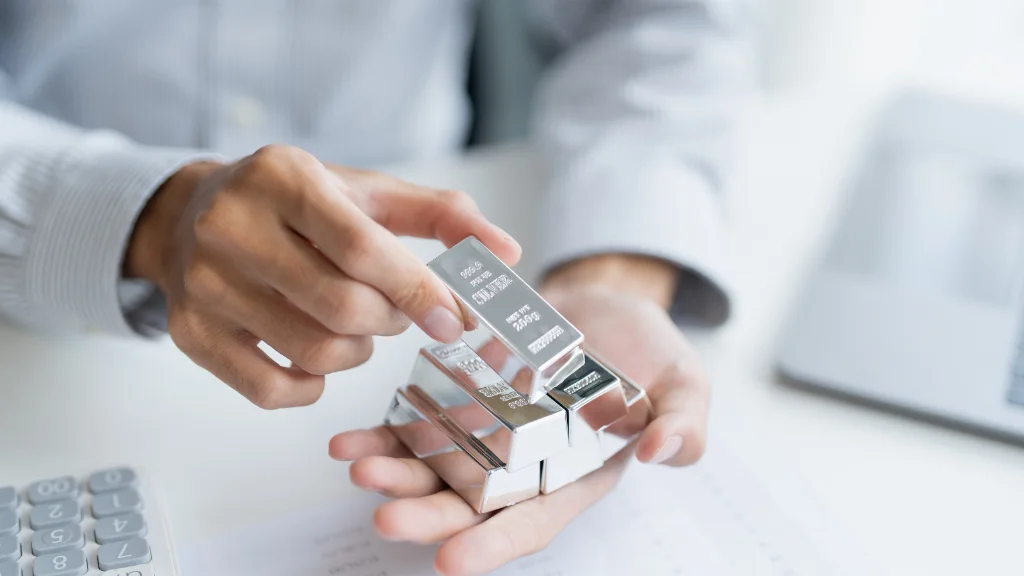 While the industrial story is compelling, the financial case for silver is equally robust. In 2026, the decision to invest in silver is often driven by a need for diversification in a volatile global economy.
Silver has a long-standing reputation as a "safe haven" asset, but its current low valuation relative to gold makes it particularly attractive for those looking for a high-beta play on precious metals. When gold moves, silver typically follows, but often with much greater velocity.
Institutional interest has shifted from speculative trading to long-term structural accumulation. We are seeing record inflows into silver ETFs and a marked increase in physical bullion purchases in major markets like India and China.
For many, silver represents a "green metal" investment that offers the defensive qualities of a precious metal alongside the growth potential of a tech-focused commodity.
The Compression of the Gold-to-Silver Ratio
The Gold-to-Silver ratio is one of the most-watched relative-value indicators in precious metals. Historically, this ratio has averaged around 55:1 over the last century. During crisis periods, it has blown out sharply, reaching 120:1 in March 2020 during the COVID panic. In early 2025, the ratio again hovered above 80:1, signaling extreme undervaluation of silver.
By mid-2026, as gold traded near $2,400 per ounce and silver crossed $45–48 per ounce, the ratio compressed toward 50–55:1. This shift reflects silver’s industrial scarcity finally being priced in, not just its monetary role.
Silver as a Hedge Against Monetary Uncertainty
Silver remains both an industrial metal and a monetary asset. Global government debt crossed $340 trillion in 2026, while real interest rates in many economies stayed close to zero or negative. For example, if inflation runs at 4.5% and government bonds yield 3%, investors lose purchasing power annually.
In such environments, non-yielding hard assets become attractive. Retail silver coin sales in the US Mint rose over 30% year-on-year, while Indian silver bar demand crossed 9,000 tonnes in 2025, reflecting silver’s role as a hedge against currency debasement and financial instability.
The Role of Geopolitical Tensions in Price Action
Silver prices react sharply to geopolitical shocks because they affect both investment demand and supply chains. During the Russia-Ukraine conflict escalation, silver jumped nearly 12% in two weeks as investors rushed into hard assets. In early 2026, renewed trade tariffs between major economies and unrest in Latin America caused similar spikes.
Silver ETFs saw net inflows of over 1,200 tonnes globally during periods of heightened tension. Investors treat silver as “portable insurance,” especially when paper assets face geopolitical or sanction-related risks.
Geographic Concentration and Political Risk
Over 50% of global silver production comes from just two countries: Mexico (~24%) and Peru (~22%). This concentration creates fragility. In 2025, labor strikes at Peru’s Antamina and Las Bambas mines disrupted output for weeks. Mexico also tightened environmental regulations, delaying permits for new projects.
Even a 3–5% production disruption can move silver prices sharply because annual mine supply growth averages only 1–2%. When the world’s largest producers face instability, prices react almost immediately due to the lack of spare supply capacity.
The Realities of Silver Recycling
 Silver recycling behaves very differently from gold. Nearly 90% of the gold ever mined still exists, because it is economically viable to recycle even small quantities. Silver, however, is often used in microscopic amounts.
A smartphone contains about 0.3 grams of silver, while a solar panel uses 15–20 grams, but recovery costs exceed resale value. As a result, industrial silver is frequently lost forever. Even during high-price periods, recycling contributes only 15–20% of the annual silver supply, compared to gold’s 30%+, tightening long-term availability.
Supply Component | Percentage of Total | Flexibility to Price Changes |
Primary Silver Mines | ~28% | Low (long lead times for new projects) |
By-product Mining | ~72% | Very Low (dependent on lead/zinc/copper) |
Recycling (Scrap) | ~18-20% | Moderate (responsive to high prices) |
Net Hedging/Stocks | Variable | Low (current stocks are at decade lows) |
Conclusion: Navigating the New Silver Supercycle
The factors that drive what drives silver demand and price movements in 2026 are more complex and interconnected than ever before. We are witnessing a transition where silver is moving from a decorative luxury to a strategic industrial necessity.
The combination of a persistent supply deficit, a massive ramp-up in green energy infrastructure, and a renewed interest in hard assets has created a unique environment for the metal.
For those looking to invest in silver, the current market offers a compelling narrative of structural scarcity. However, silver’s inherent volatility remains a factor that requires a disciplined approach.
As the world continues to digitize and decarbonize, the "silver intensity" of the global economy will only grow. Staying informed on these shifts is the best way to capitalize on what is increasingly being called the "Green Metal Bull Market."